

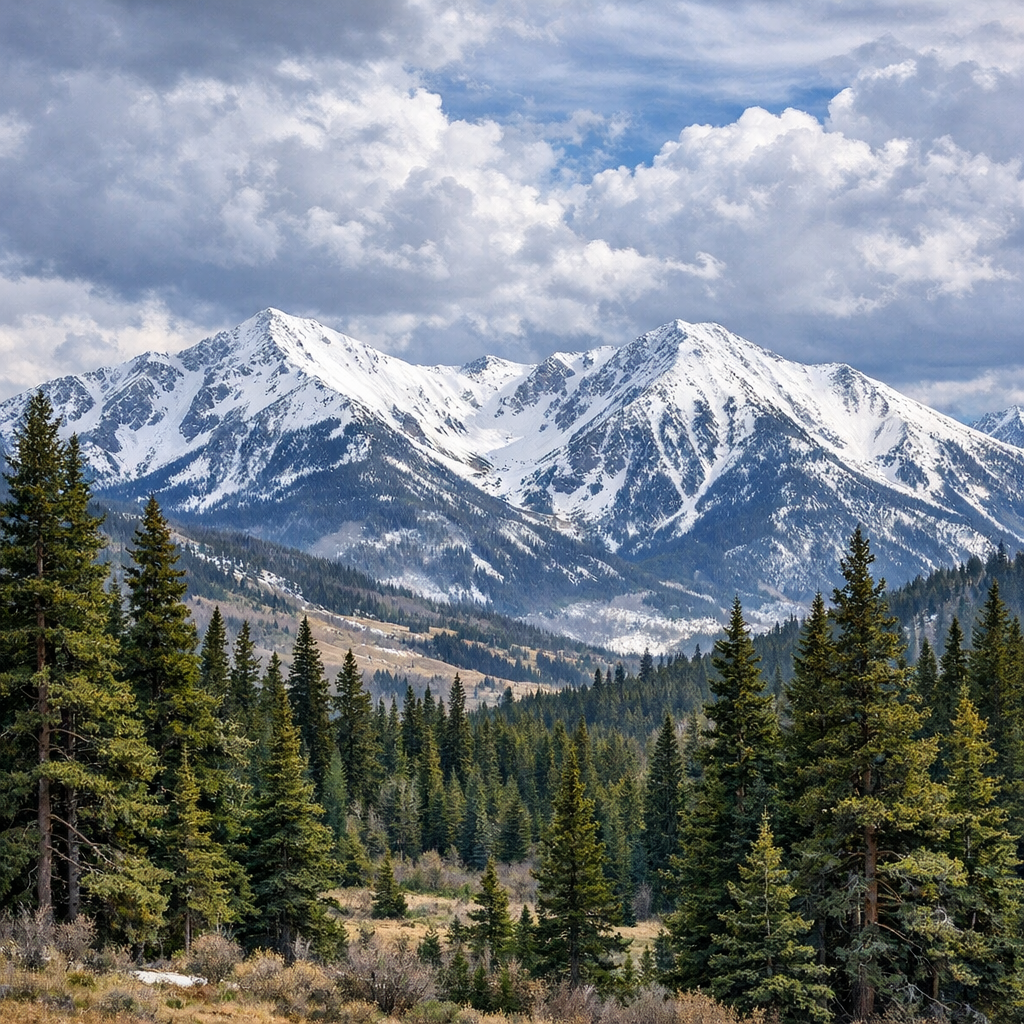
Living in Walden means experiencing the rhythms of a high mountain basin firsthand — frost is the rule much of the year, snow blanketing the land in winter, and summer bringing brief warmth and vital moisture. It’s these fluctuations — and the changes already underway — that shape daily life, wildlife, water, and fire risk.
Climate Normals & What they Mean
Walden’s climate is characterized as continental, subarctic or cool-summer (Köppen Dfc), sitting just beyond the dry, semi‐arid classifications. Annually, average highs reach into the low‐70s°F in summer and drop far below freezing through most of winter. Mean temperature across the year sits around 35°F.
Precipitation totals run low — roughly 12 to 13 inches per year — yet moisture arrives through snow, afternoon thunderstorms, and steady winter snowfall. Snowfall averages about 60–70 inches annually; many months carry both snow and rain. Winter storm activity matters not just for beauty, but for water storage, ecosystem recharge, and preparing for fire risks.
Growing Season, Frost & Plant Hardiness
Walden’s frost-free window is very short. Records indicate last spring frost typically appears between June 11–20, with first fall frost often coming between July 21–31. That gives fewer than two full months without risk of freeze, demanding care in gardening, livestock grazing, and wildfire fuel management.
The area sits in USDA Plant Hardiness Zone 4a — winters are harsh; only cold‐hardy plants that can survive lows down to −30°F or −25°F thrive. Summers are cool and brief, limiting warm‐season crops and extending snow or frost threats.
Emerging Shifts & Environmental Impacts
Warming Trends
Long‐term data point to Walden warming by about 0.21°C per decade over recent decades. That’s not dramatic in any single season, but cumulative effects ripple across snowpack, growing seasons, and fire behavior.
Snow and Water Concerns
Consistent winter snowfall is crucial for keeping streams flowing and sustaining ecosystems. Yet in recent years, early warmth and lighter snowstorms during key months have reduced snowpack, jeopardizing water availability and adding stress to forests, wildlife, and agriculture.
Fire Risk and Vegetation Changes
Dry winters and hotter summers have already extended and intensified fire seasons in many parts of Colorado. In forested and foothill areas, accumulated fuels — dead trees, shrubs, parched grasses — catch fire more easily. For Walden, where wildland and developed lands mingle, vigilance in fuel reduction and vegetation management becomes especially essential.
What Residents & Visitors Can Watch For
- Snowfall and spring runoff forecasts from NRCS and state water agencies — they inform water supply, streamflow, and wildfire prep.
- Growing season shifts — planting schedules, garden readiness, pasture use all depend on precise frost dates.
- Dry spells and wildfire warnings — during dry summers or prolonged warm winters, every spark and ember counts.
- Noticeable ecological change — tree species moving upslope, wildlife habitat shifts, or changing moisture in meadows.
Hope & Adaptation
While Walden’s climate challenges are real, residents have reasons to adapt: conserving water, planting native and hardy vegetation, managing forests and fuels, and supporting monitoring systems that inform early warning for snowpack, fire, or drought. Communities here have long lived with change — and the knowledge, passed down through generations, of reading this land’s signals. That wisdom, paired with science, gives Walden not just resilience — but agency.
As skies darken with snow, flash with lightning, or glow with sunset over aspens, remember that each season writes its ledger on land and water. By paying attention — and preparing — we help ensure Walden’s high country remains strong well into the future.